
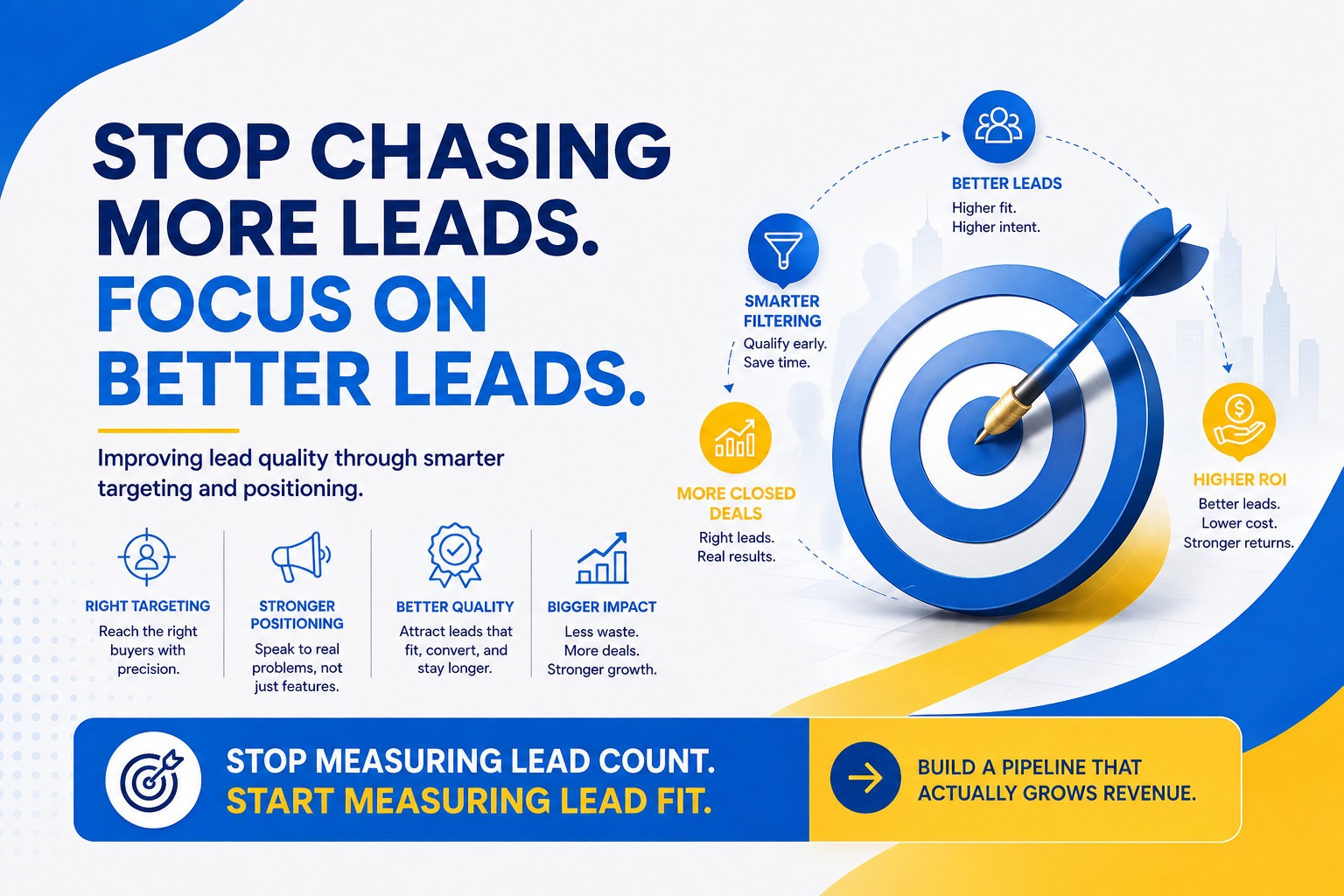
Improving lead quality through smarter targeting and positioning.
Most marketing teams treat leads like a numbers game. More forms filled, more calls booked, more names in the CRM. It feels like progress. It is not.
A pipeline full of the wrong people does not close deals. It clogs your sales calendar, wastes your budget, and buries the leads that actually matter. If your close rate keeps dropping while your lead count keeps rising, the problem is not volume. It is quality.
The volume trap
Chasing more leads feels productive because the number goes up. But a bigger funnel is not a better funnel. Sales spends hours qualifying people who were never going to buy. Marketing gets blamed for handing over junk. Everyone stays busy and nothing moves.
Ask your sales team one question: how many leads from last month were actually worth their time? In most companies, the honest answer is under 30 percent.
Why lead quality wins
A smaller list of the right people beats a large list of the wrong ones every time.
Quality leads convert faster, close at higher prices, and stay longer as customers. They cost less to serve because your team is not fighting objections that come from a bad fit in the first place.
Better lead quality comes down to two things: who you target and how you position yourself to them.
Fix your targeting
• Define your best customer with data, not guesswork. Look at your last 20 closed deals. Find the pattern in company size, industry, and buying trigger.
• Cut broad targeting. A campaign aimed at everyone convinces no one.
• Score leads before sales touches them. Fit and intent matter more than form fills.
• Kill channels that bring volume but not fit. If a channel brings clicks but not closed deals, stop funding it.
Fix your positioning
• Speak to the buyer's actual problem, not your feature list. Buyers respond to relevance, not noise.
• Show proof. Case studies and numbers convert better than claims.
• Make your offer specific. "We help B2B companies grow" tells a prospect nothing. "We help mid-size manufacturers cut lead response time by half" tells them everything.
• Match your message to the buying stage. A prospect researching a problem needs a different message than one comparing vendors.
What this looks like in practice
A tighter targeting model paired with sharper positioning does not shrink your pipeline. It changes what fills it. Fewer leads come in, but more of them are ready to buy. Sales spends less time qualifying and more time closing. Marketing spend goes toward channels that actually convert.
This shift takes discipline. It means saying no to easy volume and yes to harder, more precise targeting. But it is the difference between a pipeline that looks good on a dashboard and one that actually grows revenue.
The takeaway
Stop measuring marketing success by lead count. Start measuring it by lead fit. Talk to your sales team, find the pattern in your best customers, and build your targeting and messaging around that pattern. The leads will get fewer. The deals will get bigger.