The Hidden Cost of Slow Marketing Execution in B2B Companies

Digital marketing agency in Mumbai - Imageo Media

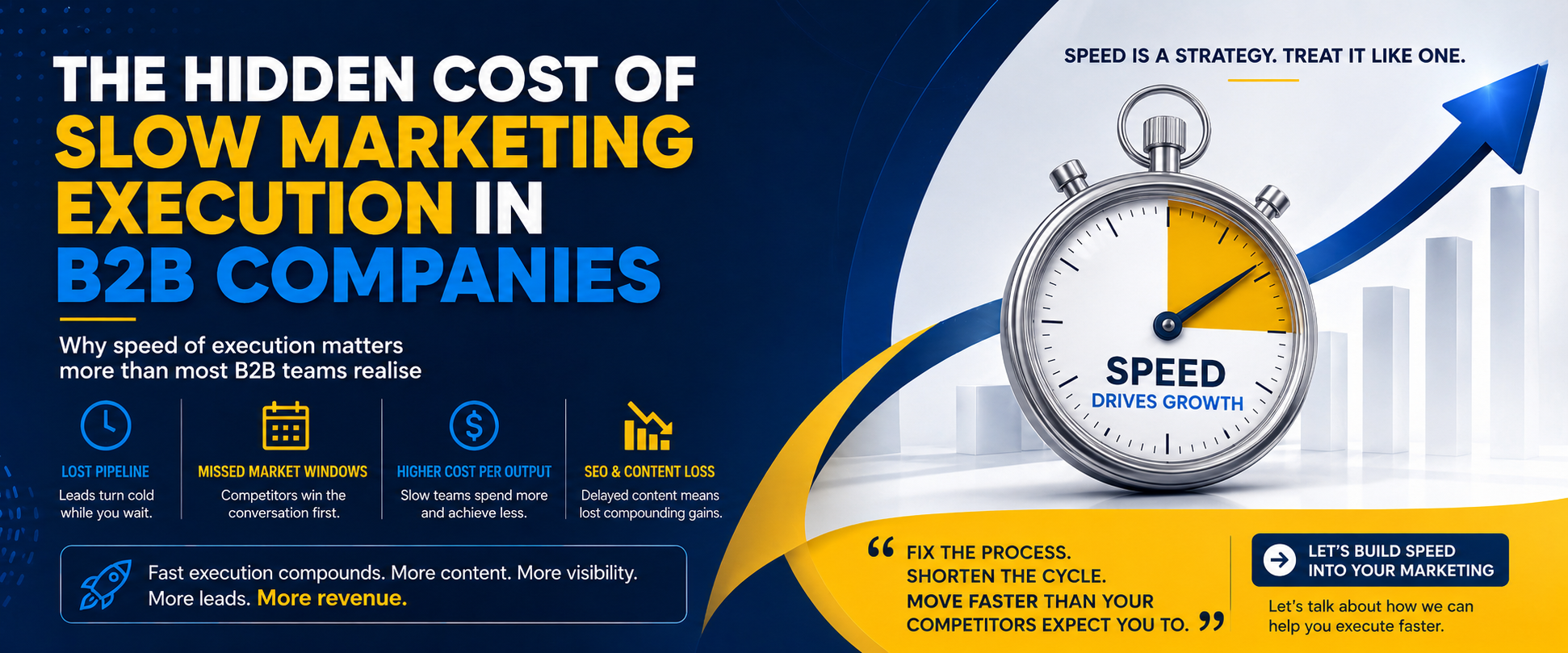
Why speed of execution matters more than most B2B teams realise

Your competitors are not always beating you with a better product. Sometimes they are winning because they move faster.

In B2B marketing, slow execution is one of the most expensive problems a company can have. It does not show up on a balance sheet. There is no invoice for it. But it costs you leads, conversions, and revenue every single month.

Here is what that cost looks like, and what you can do about it.

What "slow execution" means

Slow execution is not just about missing deadlines. It is about the gap between when an idea is approved and when it reaches your audience.

In B2B companies, that gap is usually filled with:
•  Multiple rounds of internal approvals
•  Waiting on agency briefs and revisions
•  Content that sits in a review queue for two weeks
•  Campaigns that launch after the relevant moment has passed 

A LinkedIn post about a trending industry topic that goes live 10 days  after the trend peaked does nothing for you. A case study published three months after the project closed loses its impact. Timing is part of the message.

The actual cost, broken down

Let us get specific. Here are the areas where slow execution quietly drains your marketing returns.

1. Lost pipeline from delayed lead follow-up 
Research from Harvard Business Review shows companies that respond to a lead within one hour are seven times more likely to qualify that lead than those who wait even two hours. Most B2B teams take 42 hours on average.When your marketing team is slow to produce follow-up content, nurture sequences, or campaign assets, your sales team is left waiting. And prospects go cold fast.

2. Missed market windows 
B2B buying cycles have trigger moments. A regulatory change. A new compliance requirement. A shift in interest rates. A competitor shutting down.If your team takes four weeks to build a campaign around a trigger event, you have missed the window. Your competitor who moved in week one already owns that conversation in the buyer's mind.

3. Higher cost per output 
Slow teams are expensive teams. When a campaign takes three times longer to produce, you are paying for more hours, more meetings, and more revisions. You get less output for the same budget.A study by McKinsey found that companies with fast marketing execution cycles get 3x more output per dollar than those with slow, approval-heavy processes.

4. SEO and content compounding loss 
Content marketing works on compounding returns. A blog post published today starts indexing this week and builds authority over months. A blog post delayed by eight weeks loses eight weeks of compounding.At scale, that delay across 20 pieces of content per quarter adds up to a significant SEO gap that takes months to close.

Why B2B teams are slow in the first place

The problem is rarely effort. Most marketing teams are working hard. The problem is structure.
•  Too many approval layers for every piece of content
•  No clear brief process, so briefs get rewritten multiple times
•  Agency dependencies with long turnaround times
•  Lack of pre-approved templates and brand guidelines
•  Decision-making spread across too many stakeholders

The result is a team that is always busy but rarely fast.

What fast execution looks like

Fast does not mean rushed. It means removing friction from the process without lowering quality.Companies with strong marketing execution tend to share a few things:

Clear content frameworks
They do not start from scratch for every piece. Templates, tone-of-voice guides, and pre-approved formats mean writers can move fast without waiting for direction.

Lean approval processes
One or two approvers, not five. A 24-hour turnaround expectation on reviews. Clear criteria for what needs approval versus what can go live directly.

Execution partners, not just vendors
The difference between an agency that executes and an agency that just takes briefs is real. The right partner is plugged into your business context, anticipates your needs, and moves with you, not after you.

Content calendars with buffer built in
The best teams plan four weeks ahead and have a buffer for reactive content. They are never scrambling because the calendar is already populated.

A quick self-audit for your team

Ask these questions about your current marketing operation:
•  How long does it take from a brief to a published piece of content on average?
•  How many people need to approve a standard social post?
•  When was the last time you reacted to a market moment within 48 hours?
•  What percentage of your campaigns launched when they were planned to? 

If your answers make you uncomfortable, slow execution is already costing you.

The compounding advantage of speed

Here is the thing about fast execution. It does not just save money. It creates compounding advantages.

When you move fast consistently, you publish more content. More content means more indexing, more shares, more touchpoints with your audience. Your brand becomes present in more conversations.

When you respond to market moments fast, you build a reputation for being current and relevant. Buyers notice that. Over time, it becomes a trust signal.

When your campaigns launch on time, your sales team gets better-qualified leads earlier in the quarter. That gives them more time to close.

Speed is a strategy. Treat it like one.

The bottom line

Slow marketing execution is not a minor inefficiency. It is a growth problem in disguise.

Every week a campaign is delayed, every trend you are late to, every follow-up sequence that takes too long to build, those are not just missed opportunities. They are real revenue that goes to someone else.

The B2B companies growing fastest in 2025 are not just the ones with the biggest budgets. They are the ones that execute the fastest with what they have.

Fix the process. Shorten the cycle. Move faster than your competitors expect you to.
B2B Leads Lost Before Sales Steps In

Digital marketing agency in Mumbai - Imageo Media

Your sales team is not the problem. Your ads are not the problem. Your website is quietly turning away buyers before anyone in your company even knows they showed up.

Most B2B companies pour money into Google Ads, LinkedIn campaigns, and SEO. Trafficcomes in. Then it disappears. The sales team never gets a chance to follow up because thewebsite never gave the visitor a reason to stay.

This is not a traffic problem. It is a conversion problem. And it is happening on more B2Bwebsites than most founders want to admit.

96%

of B2B website visitors leavewithout taking any action

15 sec

average time before a visitordecides to leave or stay

5x

more leads from websites withclear CTAs vs. generic ones

The website problem no one talks about

B2B buyers do not buy on impulse. They research. They compare. They talk to three vendorsbefore they shortlist one. Your website is often the first point of contact, and it has one job:convince the visitor that you are worth a conversation.

Most websites fail at this completely. Not because the design is bad. Because the intent iswrong. The website is built to look good, not to move a buyer forward.

THE CORE ISSUE

A B2B website is not a brochure. It is a salesperson that works 24 hours a day. If it cannot answer why you, why now, why should I trust you, the visitor leaves and calls your competitor.

The five ways B2B websites kill leads silently

None of these are dramatic errors. They are small, structural problems that compound. Eachone shaves off a percentage of your potential pipeline.

• Vague messaging above the fold. Your homepage headline says something like "We help businesses grow." That means nothing to anyone. A buyer who lands on your site needs to know in five seconds what you do, who you do it for, and what they get. If your headline does not answer that, they bounce.

• No clear next step. Visitors do not know what to do next. "Contact Us" is not a CTA. It isa direction with no promise attached. "Book a free 20-minute audit" or "See how we cut delivery time by 40%" gives the visitor a reason to act.

• Social proof is missing or buried. B2B buyers are risk-averse. They want proof that someone like them has worked with you and won. Case studies, logos, numbers, and testimonials need to be visible early, not tucked in a footer or a separate page.

• The website is built for one buyer type. A CFO, a VP of Operations, and a founder all want different things from you. A website that speaks to everyone in the same voice speaks to no one clearly. Buyers filter themselves out when they cannot find content that maps to their specific problem.

• Forms ask for too much too soon. A ten-field form on the first touchpoint is a conversion killer. The visitor just arrived. They are not ready to give you their phone number,
company size, annual revenue, and team structure. Ask for one or two fields. Get the email. Build trust. Ask for more later.

What the buyer experience looks like

Put yourself in the buyer's position. They saw your LinkedIn ad. They clicked. They landed on your homepage.

In the first five seconds, they read your headline. It says something generic. They scroll down. They see a list of services with no outcomes attached. They look for pricing. There is none. They look for results. There is a testimonial with no name and no numbers. They see "Contact Us" They leave.

That entire sequence takes less than ninety seconds. Your sales team never knew that person existed.

THE BUYER'S INTERNAL CHECKLIST

Every B2B buyer is silently asking: Do you understand my problem? Have you solved it for someone like me? What happens if I reach out? How long will this take? Your website needs to answer all four before the buyer forms a negative opinion.

How to fix it without rebuilding the entire website

You do not need a full redesign. You need targeted fixes in the right places. Start with the pages where the most traffic lands and the most exits happen.

Rewrite your homepage headline

→ Use the format: We help [audience] achieve [outcome] without [common pain].
→ Test two or three versions and let data pick the winner.
→ Remove every word that a competitor could also say about themselves.

Add proof above the fold

→ Place three to five client logos immediately below the headline.
→ Add one specific result with a number attached. "42 leads in 30 days" beats "We drive results."
→ If you have a case study, link it prominently. Not in the footer.

Simplify your CTAs

→ Pick one primary CTA per page. One. Not three.
→ Make it low-commitment. "Book a 20-min call" works better than "Get a proposal."
→ Put the CTA in the header, mid-page, and end of page. Repeat it without shame.

Shorten your forms

→ First touchpoint: name and email only.
→ Use progressive profiling to collect more data over multiple visits.
→ Remove any field you cannot explain a clear business reason for asking.

Segment your messaging

→ Create separate landing pages for your top two or three buyer personas.
→ Let visitors self-select: "I'm a founder" / "I'm a marketing head" / "I manage operations."
→ Each path shows different case studies, outcomes, and CTAs.

The cost of doing nothing

Every month you run paid traffic to a website that does not convert, you are paying to send buyers to your competitors. The problem is not visible in your ad dashboard. It shows up in your pipeline three months later when your sales team is complaining about lead quality.

The leads are not low quality. The website is. There is a difference.

A website that converts at 2% instead of 0.5% does not just bring in more leads. It brings in four times more leads from the same budget. That is not a small improvement. That is a fundamental shift in how your business grows.

Where to start this week

• Open Google Analytics. Find the pages with the highest exit rates. Those are your problem pages.

• Read your homepage headline out loud. If it sounds like it could belong to anyone in your industry, rewrite it.

• Count the number of CTAs on your homepage. If there are more than two, cut them down to one primary action.

• Check your contact form. If it has more than three fields, remove the extras today.

• Find one specific result you delivered for a client. Put it on your homepage with a number, a name, and a context.

Your website is already getting traffic. The fix is not more traffic. The fix is making the traffic you already have convert into conversations your sales team can close.

Your Blog Is Getting Ignored by AI. Here’s Why

You wrote a good blog. You ranked on Google. And now… crickets. No, your content didn't get worse. The game just changed. Welcome to the AIO era.
Think about the last time you searched something on Google. Did you scroll down and click a link? Or did you just read the AI summary at the top and move on?
Yeah. Everyone does that now.
That AI summary? It pulled from someone's content. Could be yours. Probably not. That's the problem AIO solves.

What is AIO?

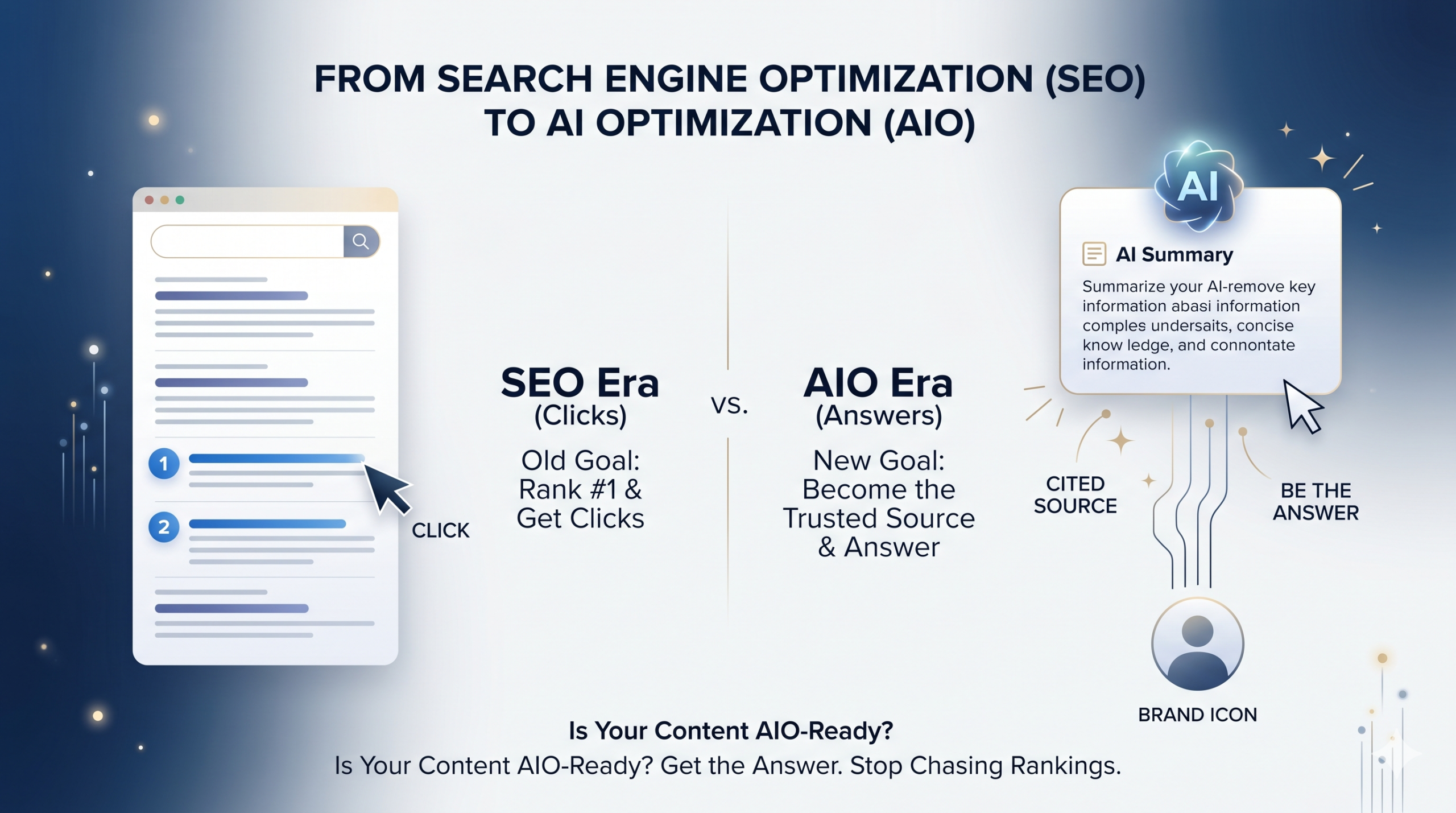
AIO stands for AI Optimization. It's the art of making your content so clear, structured, and authoritative that AI systems pick you as their source.
It's not SEO. It's the next layer on top of SEO.

So What's the Difference Between SEO and AIO?

Old SEO: "Rank #1 so people click my link."
New AIO: "Be the source AI quotes when it answers."
One gets you a click. The other makes you the answer. Big difference when 77% of mobile searches end with zero clicks.

Why This Matters Right Now

AI Overviews now appear in 58% of Google searches. That number keeps growing. When an AI answers the question directly on the search page, users have no reason to click.
Organic click rates for the #1 result dropped 58% in one year. Being first doesn't mean what it used to.
But here's the thing: if your content gets cited by the AI, you still win. People see your brand name. Your authority grows. And you get a different kind of traffic direct visits from people who searched other ways, or who use ChatGPT, Perplexity, or other AI tools.

How Do You Actually Do AIO?

01. Answer the Full Question. Don't tease. Don't save the good stuff for later. AI rewards pages that answer completely, upfront. Put your best insight in the first paragraph, not buried at the bottom.

02. Write Like a Human, Structure Like a Machine. Use clear headings, short paragraphs, bullet points, and lists. AI scans for extractable answers. If your content is a wall of text, it moves to the next source.

03. Say Something No One Else Says. Your opinion, your data, your story. Generic content gets ignored. Original takes, unique research, and expert voice get cited. Be specific. Be yourself.

04. Get Mentioned Outside Your Own Site. Press, podcasts, LinkedIn, Reddit. AI learns who to trust from what the internet says about you. Third-party mentions signal authority.

Common AIO Mistakes

Writing for keywords instead of answering questions. AI doesn't think in keywords. It thinks in concepts.

Making your answer hard to find. If the AI can't extract your answer in the first few sentences, you lose.

Copying what everyone else writes. Generic takes don't get cited. Unique angles do.

Ignoring your brand's presence elsewhere. Blog posts are just one piece. Being mentioned on Reddit, in podcasts, on LinkedIn that builds the trust signal AI looks for.

Slow websites and poor mobile experience. AI bots bounce from pages that load slowly or have bot-blocking.

Who's Winning at AIO Right Now

The brands winning in 2026 have three things in common:

Strong brand presence across multiple platforms, not just their own site.

Content that's structured and easy for AI to extract clear headings, complete answers, readable format.

A strategy built around being the answer, not just ranking high.

Only 16% of brands are tracking their AI search performance. That means 84% have no idea if they're being cited or not. That's your competitive gap.

Where to Start

Don't overhaul everything. Start with your best-performing content. The stuff that already ranks well. Ask yourself:

Is the answer obvious in the first paragraph?

Can an AI extract it easily?

Is it unique, or could it be found anywhere?

Are you mentioned anywhere else on the internet that backs this up?


Fix one page. Then the next. Then start building a real AIO strategy.

The Bottom Line

AIO isn't some techy overhaul. It's a mindset shift. Stop writing for the algorithm. Stop chasing rankings like they matter. Start writing to be the answer. The brands doing this right now are the ones showing up everywhere Google, ChatGPT, Perplexity, Reddit, podcasts. They're the sources AI cites. They're the ones building real authority.
Your rank #1 spot is important. But it's no longer enough. Get your AIO together before your competitors figure it out.

SXO: The Missing Piece Most Brands Don’t Know They Need

There's a conversation that happens a lot in marketing circles. Someone asks, "Why is our traffic up but our conversions are still flat?" And the room goes quiet, because honestly, it's one of the more frustrating puzzles in digital marketing.

The answer, often, comes down to one thing: the brand is doing SEO, but they're not doing SXO.

So, What Even Is SXO?

SXO stands for Search Experience Optimization. Think of it as the natural evolution of traditional SEO, where getting found was the finish line. SXO says that being found is just the starting gun.
It's the practice of combining search visibility with a genuinely great user experience. Not just ranking for the right keywords, but making sure that when someone lands on your page, they stay, engage, and do something. Whether that's filling out a form, making a purchase, or booking a call.
SEO gets people to the door. SXO makes sure they walk through it.

Why SEO Alone Isn't Enough Anymore

Here's the thing. Google has changed enormously over the past few years. It's no longer just scanning pages for keyword density. It's paying close attention to how people behave on your site. Are they scrolling? Are they clicking? Are they bouncing within three seconds?
Metrics like dwell time, pages per session, and click-through rate have become signals that influence rankings. Which means a poor user experience doesn't just hurt your sales. It can actively drag down your search position too.
So, the old approach of "rank first, worry about the rest later" has a short shelf life now.

What SXO Actually Looks Like in Practice

This is where it gets interesting, and honestly, where a lot of brands realise they've been leaving a lot on the table.

It starts with intent, not just keywords. Two people might type very different things into Google but want the same outcome. SXO digs into what someone is trying to accomplish and makes sure your content speaks directly to that.

Then comes the design and flow. Great content buried in a confusing layout is still a problem. SXO looks at how a visitor moves through a page, where the eye goes first, where friction shows up, where people drop off.

Speed and mobile experience matter more than most people realise. If your site loads slowly on a phone, a huge chunk of your audience is gone before they've read a single sentence. SXO treats technical performance as a core part of the experience, not an afterthought.

And the content itself must earn its place. Not long for the sake of looking thorough. Not short just to keep things minimal. The right length, the right tone, the right depth; enough to genuinely help the reader.

How This Connects to Creative and Brand Work

Here's something we think about a lot: SXO isn't just a digital marketing concern. It reaches into creative design and media production too.
The visual language of a landing page, the quality of a brand video, the way a campaign is structured, all of it shapes how someone feels about your brand in those first few seconds. And that feeling determines whether they stay or leave.
A brand that invests in high-quality creative and then pairs it with smart SEO strategy is essentially giving itself two advantages at once: visibility and trust. The first brings people in. The second keeps them engaged long enough to convert. Because design, when it's done right, reduces friction. And reducing friction is exactly what SXO is all about.

The Metrics That Actually Tell You If It's Working

One of the more liberating things about SXO is that it gives you a much richer picture of performance than raw traffic numbers. You're looking at things like:

Bounce rate: are people immediately leaving, or sticking around?

Time on page: are they reading, or just landing?

Conversion rate: of everyone who visits, how many are doing the thing you want them to do?

Scroll depth: how far down the page are people getting before they lose interest?

Return visits: are people coming back? A strong signal of genuine value.

Why Ambitious Brands Are Leaning into This

The brands that are growing consistently right now aren't just outspending their competitors on ads. They're building digital experiences that people want to engage with.
SXO is part of that. It's the difference between a brand that shows up in search and a brand that stands out in search. One gets a click. The other earns a customer.
For any brand that's serious about growth, not just vanity metrics but real, compounding growth, getting SEO and user experience working together isn't optional anymore. It's the baseline.

Where to Start

If this is new territory for your brand, the honest starting point is an audit. Look at your current pages with fresh eyes, or better yet, have someone outside your organisation look at them. Where does the experience feel clunky? Where does the content feel vague? Where are visitors dropping off before they should?
From there, it's about prioritising. You don't have to overhaul everything overnight. But every improvement you make, whether it's tightening up a headline, improving page speed, or adding a clearer call to action, compounds over time.

SXO isn't a campaign. It's a practice. And the brands that treat it that way are the ones that keep showing up, keep converting, and keep growing.

At the end of the day, people don't remember the brand that ranked number one. They remember the brand that made them feel like they were in the right place. SXO is how you become that brand.

Want to know if your website is helping your brand grow or silently losing customers?

We’ll do a free SXO audit of your website and identify:
• User experience gaps
• SEO performance issues
• Conversion bottlenecks
• Speed and mobile experience problems

Write to us at marketing@imageomedia.com and let’s make your website work harder for your business.

Generative Engine Optimization (GEO)

Digital marketing agency in Mumbai - Imageo Media

The New Frontier of Digital Visibility

As AI systems answer more questions directly, being cited in an AI's response may matter more than ranking first on Google.

What Is GEO?

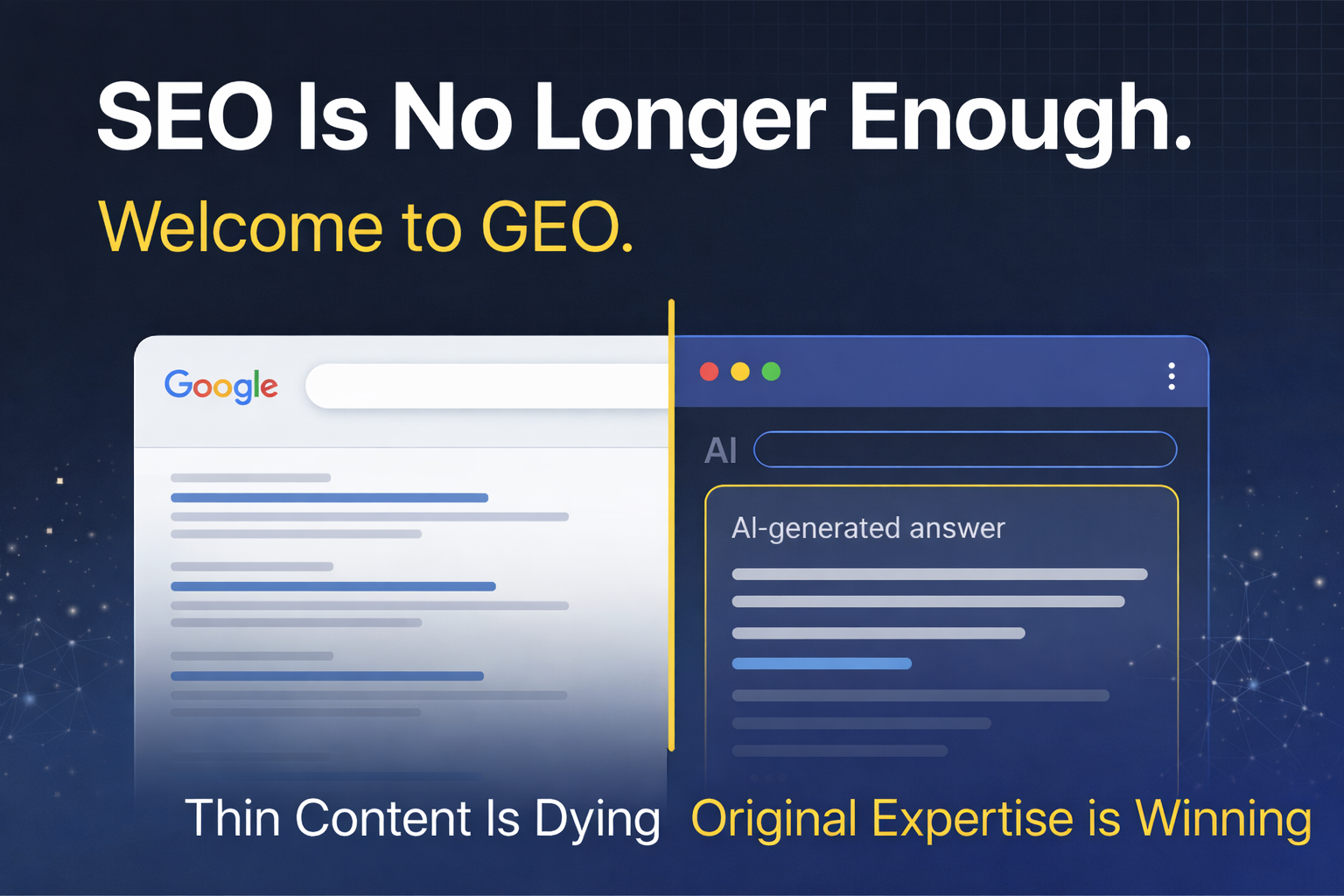
Generative Engine Optimization (GEO) is the practice of optimizing your content so it gets cited, surfaced, or summarized by AI systems like ChatGPT, Google’s AI Overviews, Perplexity, Claude, and similar large language model (LLM)-powered tools.
Where traditional SEO (Search Engine Optimization) focused on ranking high in a list of blue links, GEO focuses on becoming the source that AI systems trust, quote, and reference when generating answers.

SEO = Getting to the top of a results page.
GEO = Getting inside the AI's answer itself.

SEO vs. GEO: What's Different?

Traditional SEO

Rank in search results
Backlinks & keywords
Click-through rate
Crawler-optimized pages

GEO (New)

Be cited in AI answers
Authority & clarity
Brand visibility in AI
Factual, well-cited prose

Why GEO Matters Now

The numbers are staggering. AI-powered search is growing at a pace that’s disrupting decade- old assumptions about web traffic:

Google’s AI Overviews now appear in over 50% of searches in some categories

ChatGPT serves hundreds of millions of users monthly, many using it as a first-stop research tool

Perplexity AI has seen explosive growth as an “answer engine”

Traditional organic click-through rates are falling as AI summaries answer queries without requiring a click

If your content isn’t structured for AI consumption, you’re invisible to a fast-growing share of information seekers - even if you rank #1 on Google.

How GEO Differs from SEO

Dimension SEO GEO
Goal Rank in search results Be cited in AI answers
Audience Search engine crawlers LLM training & retrieval systems
Key signals Backlinks, keywords, page speed Authority, clarity, structure, citations
Content style Keyword-optimized Factual, well-cited, conversational
Metrics Rankings, impressions, CTR Mentions in AI outputs, brand visibility
Time horizon Weeks to months Ongoing, compounding

The 6 Core Pillars of GEO

1. Authority and Trustworthiness
AI systems prioritize sources that are widely cited, linked by authoritative domains, and consistent over time. Include author bios with credentials, cite sources, and build backlinks from respected institutions.

2. Clear, Structured Content
LLMs parse content differently than humans do. Organized headings, plain language, bullet points, and direct answers perform well. Answer questions directly and early - don’t bury the key insight – lead with it.

3. Original Research and Data
Being the original source of a fact or study is one of the fastest paths to AI citation. Publish original surveys, coin industry terms, and share proprietary data.

4. Topical Depth and Coverage
Ten deeply researched articles outperform a hundred shallow ones. Build topic clusters, answer related questions, and go beyond surface-level takes.

5. Schema Markup and Technical Structure
Wikipedia, Wikidata, LinkedIn, Google’s Knowledge Graph, Crunchbase - AI Structured data signals to AI what kind of content it's reading. Implement FAQ, Article, and How To schema. Keep HTML clean and metadata accurate.

6. Brand Mentions Across the Web
AI builds a picture of your brand from Wikipedia, industry publications, reputable blogs, and social signals - not just your own site. Pursue earned media consistently.

GEO Audit Checklist

Use this to evaluate your content’s GEO-readiness:

Main question answered within the first 100 words

Page cites credible external sources

Original data, research, or expert insight present

Headings phrased as natural questions

Content goes deeper than a typical Google result

Brand mentioned and linked across the web

Author identified with relevant credentials

Content updated within the last 12 months

Common GEO Mistakes to Avoid

Keyword stuffing for bots. LLMs don’t respond to keyword density the way crawlers do. Over-optimized content reads as low quality.

Thin or generic content. If it could have been written by anyone about anything, AI won't prioritize it. Specificity and originality win.

Ignoring conversational formats. AI systems are trained on natural language. Direct Q&A formats and plain phrasing perform significantly better.

Not monitoring what AI says about you. Set up tracking. Strengthen the sources being cited. Correct inaccuracies where possible.

"The brands that invest in authority, depth, and trust today are positioning themselves to win the AI-driven web of tomorrow."

Your Ads Are Getting Expensive. And This Is the Real Reason Why.

You're spending more on ads every month. But have you checked whether your brand is the problem?

Most business owners respond to rising ad costs by tweaking their targeting, increasing their budget, or switching platforms. Very few look inward at the one silent killer that is quietly inflating their Customer Acquisition Cost (CAC) every single month- inconsistent branding.

The Disconnect Nobody Talks About

Picture this scenario. A potential customer sees your Instagram post, it looks premium, polished, and professional. They are intrigued, so they visit your website. But it feels dated, slow, and disconnected from what they just saw. They receive a brochure from your sales team that looks like it belongs to an entirely different company. Your ad says one thing; your sales pitch says another.
This is not a hypothetical. This is the reality for a majority of growing businesses today.
At Imageo Media, we recently reviewed creatives from multiple growing brands across industries. One pattern stood out with striking consistency, no visual or messaging alignment across platforms. Same company, completely different communication everywhere you look.

What Inconsistent Branding Actually Costs You

Inconsistency is not just an aesthetic problem. It is a business performance problem. Here is how it directly hits your bottom line:

Conversion rates fall - Customers who don't recognize or trust your brand quickly will not convert, no matter how good your offer is

Ad costs rise - Platforms like Meta and Google reward relevance and engagement; a confusing brand story lowers your quality scores and pushes your cost-per-click higher

Sales cycles become longer - When your messaging is scattered, prospects need more time (and more convincing) before they feel confident enough to buy

More follow-ups are needed - Your sales team ends up doing the job that your brand should have already done, building trust All of this compounds into a significantly higher CAC over time, eating into your margins and making growth increasingly expensive.

Why Trust Is the Core Currency of Advertising

Advertising works on one fundamental principle: trust triggers action. When a customer sees your ad, they make a split-second decision based on how familiar, credible, and coherent your brand feels to them. If your visual identity, tone of voice, design language, and messaging are consistent across every touchpoint; your Instagram, your website, your brochures, your ads, your sales conversations; you dramatically reduce that decision- making friction.
Strong branding is not about looking good. It is about reducing the mental effort a customer needs to trust you. And the faster they trust, the faster they convert.
When customers can instantly recognize your message, design style, tone, and positioning across every platform:

They trust faster - because familiarity breeds confidence
They remember you longer - because consistency creates mental anchors
They convert easier - because there is no confusion to overcome

Targeting vs. Brand Consistency: Which Compounds Faster?

Most businesses pour their energy into optimizing targeting, the right audience, the right placement, the right time of day. These are important levers, no doubt. But targeting optimization has a ceiling. Once you've found your ideal audience, you still need to convert them.
Brand consistency, on the other hand, compounds over time. Every time a customer encounters a coherent brand, whether on social media, a website, a physical brochure, or a sales call, that impression layers on top of the last one. The brand becomes familiar. Familiar becomes trusted. Trusted becomes purchased.
Businesses that invest in brand consistency early will consistently outperform those that rely purely on targeting, not just in ad costs, but in overall lifetime customer value.

Where to Start: A Brand Consistency Audit

If you are unsure whether your brand is consistent, start with a simple self-audit across these five touchpoints:
1. Social Media - Does your Instagram, LinkedIn, and Facebook look visually cohesive?
2. Website - Does the messaging, design, and tone match your social presence?
3. Paid Ads - Do your ad creatives feel like a natural extension of your brand?
4. Sales Collateral - Do your brochures, presentations, and proposals look like they belong to the same family?
5. Sales Conversations - Is your team using the same brand language and positioning you put out publicly?

If the answer to even two or three of these is "no," your brand inconsistency is likely costing you more than you realize.

Final Thought

The brands that will win in an increasingly expensive digital advertising landscape are not necessarily those with the biggest budgets, they are the ones that have built the deepest trust. And trust begins with consistency.
If you would like a quick brand consistency checklist tailored for your business, reach out to us at marketing@imageomedia.com. We'd love to help you plug the leaks before you spend another rupee on ads.

Imageo Media LLP is a creative branding and advertising studio helping businesses build consistent, high-impact brands across all platforms.

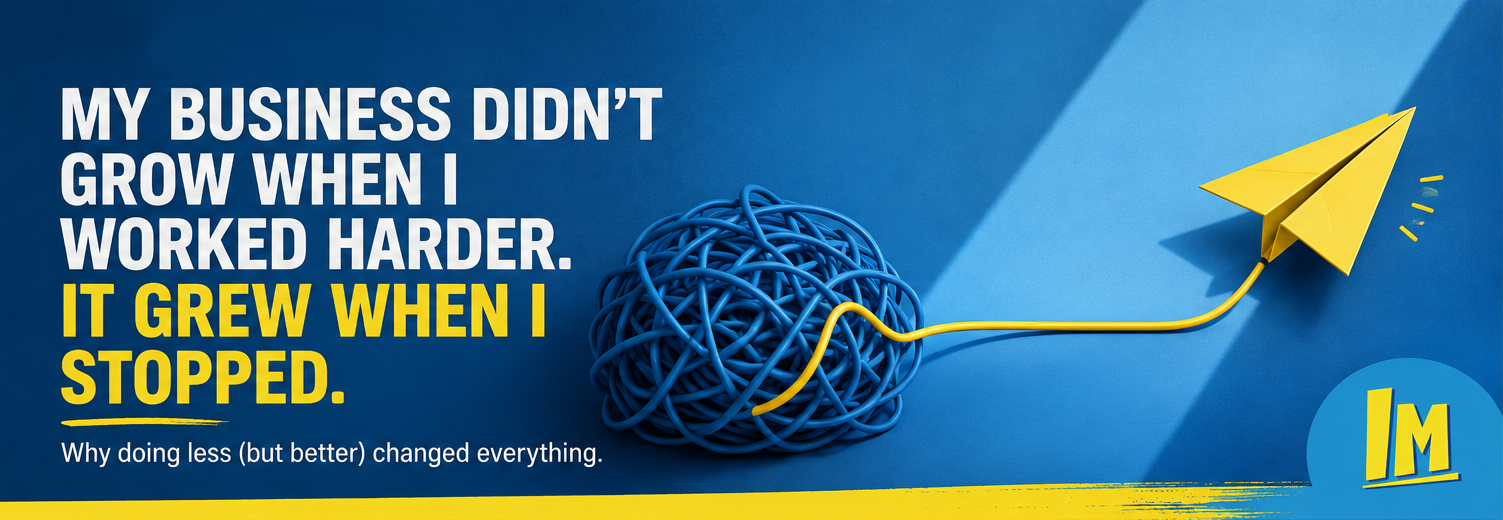
My Business Didn’t Grow When I Worked Harder. It Grew When I Simplified.

Digital marketing agency in Mumbai - Imageo Media

A counterintuitive lesson that took me years - and one burnout - to finally learn.

There's a story we tell ourselves about success.
It goes like this: if things aren't working, work harder. Wake up earlier. Add another offer. Say yes to more clients. Build another funnel. Hire someone. Launch a new product. Post more content. Send more emails.
Do. More.
It's the default setting of almost every ambitious founder I've ever met. It was certainly mine.
And for a long time, I believed it completely.

The Harder I Worked, The More I Spun My Wheels

A few years into running my business, I was putting in more hours than ever. I had five service offerings. A growing team. A content calendar with three posts a week. A pipeline full of leads. Partnerships in the works.
On paper, it looked like momentum.
In reality, I was drowning.
My team was confused about priorities. My clients were getting average work instead of exceptional work. I was constantly in reactive mode - answering messages, fighting small fires, sitting in meetings that didn't move the needle. Revenue had plateaued. Worse, my energy had collapsed.
I was doing everything. And doing none of it well.
The harder I pushed, the more resistance I felt. Like driving with the handbrake on.

The Moment Everything Changed

Burnout has a way of forcing the conversations you've been avoiding.
After a particularly brutal quarter - missed targets, a key client churned, two team members burned out alongside me - I sat down and asked a question I had never seriously asked before:

What is actually working here?

Not what should be working. Not what I had invested in. Not what looked good in a pitch deck. What was actually, measurably, undeniably working?
The answer was uncomfortable. Out of five service offerings, one was responsible for nearly 80% of revenue and nearly 100% of our best client relationships. One content format - long-form articles - drove almost all our inbound leads. One type of client - mid-sized B2B companies going through a transition - got outsized results and referred others.
Everything else? Noise.
So I did something that felt deeply counterintuitive at the time.
I cut.

What Simplification Actually Looks Like

ASimplification isn't laziness. It isn't quitting. It isn't settling.
It is the disciplined, sometimes painful act of removing everything that dilutes your best work.
Here's what it looked like for me in practice:

I cut four of my five service offerings. We went all-in on the one that worked. No more "but maybe someone will want this." No more hedging. One offer, priced properly, delivered exceptionally well.

I stopped posting on three platforms and focused on one. Instead of mediocre presence everywhere, I chose depth on LinkedIn. The reach didn't collapse - it grew, because the content got better when I wasn't spreading myself thin.

I got radically specific about who I serve. I stopped saying yes to every lead that could pay. I started saying yes only to the clients where I knew - genuinely knew - we could deliver something remarkable. The qualification conversation that used to feel like lost revenue started feeling like the most valuable conversation in the process.

I eliminated meetings that existed out of habit. A weekly team meeting that had drifted into a 90-minute catch-up became a 20-minute focused standup. I got hours back every week.

The business didn't implode. Within three months, revenue had climbed. Within six, it had grown more than in the previous two years combined.

Why Complexity Feels Safe (But Isn't)

Here's the uncomfortable truth about why we overcomplicate things. Complexity feels like progress. Multiple offers feel like resilience. A packed calendar feels like demand. Saying yes feels like opportunity. More features, more options, more content - it all feels like building something.
But feeling productive and being productive are not the same thing.
Complexity is also a hiding place. When you have ten things in motion, it's easy to avoid confronting whether any single one of them is truly excellent. You can always blame the lack of results on the other nine things you're juggling. You never have to face the question: is my best work actually good enough to stand alone?
Simplification removes that hiding place. It forces you to bet on your strongest hand. That's terrifying - and it's exactly why most people don't do it.

The Lesson From Companies Who Got It Right

This isn't just a personal observation. The pattern holds across businesses of every size.
Steve Jobs returned to Apple in 1997 to find a company with dozens of product lines, licensing deals, and initiatives running simultaneously. The company was haemorrhaging money. His first move wasn't to add more. It was to cut the product line from over 350 items to just four. Four. That clarity - and the focus it enabled - became the foundation for one of the greatest corporate turnarounds in history.
Warren Buffett, when asked about success, didn't talk about doing more. He talked about his "25-5 rule" - write down your 25 most important goals, identify the top 5, and treat the remaining 20 not as secondary priorities, but as things to actively avoid. The things that didn't make the top five weren't low priorities. They were distractions.
In his book Essentialism, Greg McKeown puts it plainly: "The way of the Essentialist means living by design, not by default." The undisciplined pursuit of more gets in the way of the disciplined pursuit of better.

Three Questions That Will Cut Through the Clutter

If you're building something right now and it feels harder than it should, try this exercise.
Sit with these three questions honestly - not the answers you wish were true, but the ones that are:

1. What is the one thing in your business that, if you removed everything else, you could still build something exceptional around?
This is your core. Everything that isn't this is a candidate for cutting.
2. Where are you doing adequate work when you could be doing extraordinary work?
Adequate work spread across ten things will always lose to extraordinary work focused on one. Where is your energy getting diluted?
3. What are you saying yes to out of fear rather than alignment?
Fear of missing out. Fear of disappointing someone. Fear of having fewer options. Fear is not a strategy. Audit your commitments and ask which ones you'd choose again today, with fresh eyes.

The Counterintuitive Truth About Growth

More is not more. In business - as in most things - more is often just more noise.
The businesses that scale aren't usually the ones doing the most things. They're the ones doing the right things, relentlessly and exceptionally well. They've made peace with the trade-off: depth over breadth, mastery over variety, clarity over optionality.
There is a version of your business that is leaner, sharper, and more profitable than the one you're running right now. It doesn't require more hours. It requires more honesty about what to stop.
The market doesn't reward effort. It rewards excellence. And excellence requires focus.

Where to Start

You don't have to blow up everything tomorrow. Simplification is a practice, not a single event.
Start small. Pick one thing this week to stop doing. One commitment to decline. One offer to sunset. One meeting to cancel. One platform to step back from.
Notice what happens. Not just to your results - but to your energy, your attention, your quality of work.
Then do it again.
Bit by bit, you will find the version of your business that doesn't just survive the grind - but thrives without it.

The hardest thing I ever did for my business was give it permission to be smaller. What it became, as a result, was so much better.

What's one thing in your business you've been holding on to that you know, deep down, needs to go? I'd love to hear it.

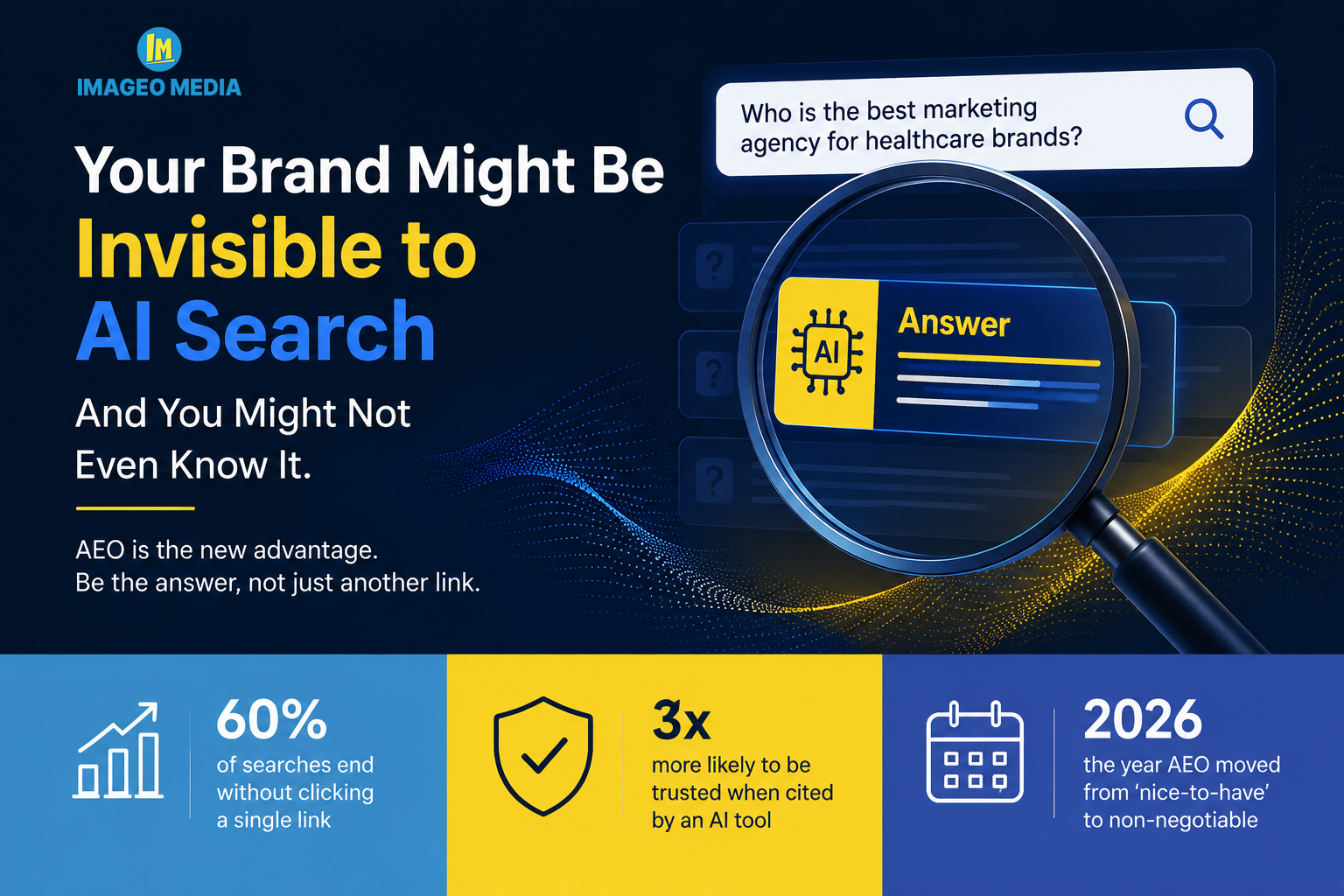
Your Brand Might Be Invisible to AI search – And You Might Not Even Know It

Digital marketing agency in Mumbai - Imageo Media

Here’s something most brands haven’t caught up with yet: the way people search for things has quietly changed under everyone’s feet. And if your marketing strategy hasn’t shifted with it, you’re likely being skipped - not just outranked.

WHAT’S ACTUALLY HAPPENING

People Stopped Browsing. They Started Asking.

Think about how you look things up now versus five years ago. You probably don’t scroll through ten links anymore. You type a question - or speak it - and expect an actual answer, right there, delivered to you. No clicking around. No comparing pages. Just: here’s what you need to know.

That shift didn’t happen overnight, but it’s very real now. Whether someone is using Google’s AI Overviews, asking ChatGPT, talking to Alexa, or using any one of a dozen AI- powered search tools - they’re getting responses generated by systems that have decided, on their behalf, which sources to trust.

For brands, that’s a big deal. Because if those systems aren’t pulling from your content, your brand might as well not exist in that moment - no matter how good your website looks or how much you’ve spent on ads.

60%

of searches end without anyone clicking a single link

3x

more likely to be trusted when cited directly by an AI tool

2026

the year AEO moved from 'nice-to-have' to genuinely non-negotiable

SO WHAT IS AEO, EXACTLY?

Answer Engine Optimization - In Simple Terms

AEO stands for Answer Engine Optimization. At its core, it means making your content easy for AI-powered tools to understand, trust, and actually use when someone asks a relevant question.
It’s a natural extension of what good marketing has always been: being the most helpful, clearest, most credible voice in the room. The room has just changed. Now it’s a machine deciding who speaks first.
Unlike traditional SEO - which is largely about getting your page to rank high in a list - AEO is about being selected as the answer itself. It’s a subtle but meaningful difference. One gets you seen. The other gets you spoken.

“With AEO, you’re not chasing a ranking anymore. You’re earning the right to be the thing the algorithm says out loud.”

SEO VS AEO

They’re not the same thing - but they work together

A lot of people hear “AEO” and assume it means ditching everything they’ve built with SEO. That’s not quite right. Think of it less like a replacement and more like a second floor. SEO is still the foundation - your technical setup, your domain credibility, your load speeds - all of that still matters. AEO builds on top of it.

Traditional SEO goal AEO goal
Get your page in front of people who are already looking. Drive traffic through rankings and relevance. Get your content cited as the trusted source. Be the answer - not just an option on a list.
How you measure it How you measure it
Click-through rates, organic traffic, keyword position reports. Brand citations in AI responses, zero-click visibility, assisted conversions from AI- referred traffic.

The brands that are winning right now aren’t choosing between SEO and AEO. They’re doing both - with a clear understanding of what each one is for.

WHAT ACTUALLY MOVES THE NEEDLE

Five things that make AI systems pick your brand

1. Write the way people actually talk
AI systems are trained on conversational language. If your content sounds like a legal document, it’s going to get skipped over. Lead with a clear answer. Use real questions as headings. Say the thing directly before you explain it.

2. Use structured data to spell it out
FAQ schema, HowTo markup, and speakable tags are like putting a sticky note on your content that says “this part right here is the answer.” Don’t assume machines will figure it out on their own.

3. Build real credibility signals
Author bios with actual credentials. Original research. Case studies with real numbers. The E-E-A-T framework - Experience, Expertise, Authoritativeness, Trust - isn’t just a Google thing anymore. It’s how AI decides who it should be listening to.

4. Own a topic, not just keywords
The old approach was to chase as many keywords as possible. AEO rewards the opposite - going deep on a defined subject area until you’re genuinely the most useful source on it. Breadth is out. Depth is in.

5. Make your brand entity consistent everywhere
Wikipedia, Wikidata, LinkedIn, Google’s Knowledge Graph, Crunchbase - AI systems cross-reference all of these. If your brand is described differently in different places, or missing from key directories, that inconsistency hurts you.

THE CREATIVE ANGLE MOST BRANDS MISS

Design and production are part of AEO too

Here’s something that often gets left out of the AEO conversation: it’s not just a copywriting or technical SEO exercise. The way your brand presents itself visually - and how that visual identity translates into video, photography, and digital media - affects whether AI systems treat you as a credible, established entity.
A well-produced brand video that gets shared and cited across the web adds to your entity authority. A strong visual identity that’s consistent across every touchpoint helps AI knowledge graphs recognise and categorise you accurately. Creative work isn’t separate from your discoverability - it’s feeding into it constantly.
That’s a big part of why brands that invest in full-service marketing - where creative, digital, and production are all working together - tend to build the kind of presence that AEO rewards. It’s not one team’s job. It’s the whole picture.

“The brands getting cited by AI aren’t just the ones with the best keywords. They’re the ones that look, sound, and feel like the real authority - consistently, everywhere.”

WHERE TO START

You don’t need to overhaul everything at once

The good news is that AEO doesn’t require tearing up what you’ve already built. It’s more about adjusting how you create content from here on out - and making a few targeted updates to what already exists.
Start by looking at your highest-traffic pages. Do they actually answer a clear question in the first two or three sentences? Most don’t - they build up to the answer. Rewriting those opening sections to lead with the point (and then support it) is probably the single fastest win available to most brands right now.
From there, add FAQ schema to your key pages, claim your Google Knowledge Panel if you haven’t already, and start building an internal habit around “what question does this piece of content answer?” Every piece of content your brand produces should have a clear, extractable answer at its heart.
It takes time to see compounding results from AEO, just like it did with SEO. But the brands that start now are building the kind of trusted presence that will be very hard to displace once it’s established.

Ready to make your brand the answer - not just another option?

We help ambitious brands build the creative, digital, and media foundations that AI- powered search rewards. From content strategy to full-scale production, everything we do is built to work together.

Logo design and its importance for brand growth

Digital marketing agency in Mumbai - Imageo Media

The Silent Ambassador: Why Your Logo Is the Most Powerful Tool for Company Growth

Every great brand has one thing in common - a logo that speaks before anyone opens their mouth. Before a customer reads a single word about your company, before they experience your product or service, they see your logo. In that fraction of a second, a world of perception is built. For a business owner, understanding the science and strategy behind logo design is not optional - it is foundational.

The Logo Is Not Just a Symbol

A logo is the singular visual representation of everything your company stands for. It communicates your values, your personality, your promise - all without a single word. Research shows that  75% of consumers recognize a brand by its logo alone , making it the most cost-efficient marketing asset a company can possess.
The numbers speak clearly. Companies with well-designed logos experience revenue growth of up to  33% , while consistent branding built around a strong logo can raise overall revenue by up to 23%.   A powerful logo is not a design expense - it is a business investment with measurable returns.

First Impressions Are Formed in Milliseconds

The human brain processes visual information 60,000 times faster than text. Your logo triggers an almost instantaneous emotional and cognitive response in the viewer's mind. This is why professional logo design must go far beyond aesthetics - it must be strategically engineered.

A professionally designed logo achieves several critical objectives simultaneously:

• Instant Recognition - helps customers quickly identify the brand among competitors

• Emotional Connection - colors, shapes, and typography evoke specific emotions

• Brand Consistency - provides a foundation across all marketing materials, from websites to packaging

• Credibility and Trust - a polished logo signals professionalism and reliability

Studies confirm that a well-designed logo is  48% more likely to inspire brand loyalty  among consumers, and companies with robust logo design are  27% more likely to attract new talent  - a benefit that extends well beyond customer acquisition.

The Neuroscience of Logo Design

Modern research has moved beyond intuition. A 2025 study published in Behavioral Sciences combined advanced neuroscience technology with cognitive survey methods to analyze how logo designs activate emotional responses and shape brand perception. The findings confirm that logos stimulate the brain's emotional center, not just the rational decision-making cortex - meaning people feel your brand before they think about it.

This is a critical insight: consumers primarily use  emotions rather than logic  when evaluating brands. A logo that elicits the right emotional response can directly and positively influence purchasing behavior. This is why a scientific approach to design - grounded in color psychology, shape symbolism, and visual hierarchy - is not merely an artistic exercise but a business strategy.

Color Psychological Effect Best Suited For
Red Energy, urgency, passion, excitement Food, retail, sports, entertainment
Blue Trust, calm, professionalism, reliability Finance, technology, healthcare
Green Growth, balance, nature, sustainability Eco-brands, wellness, finance
Yellow Optimism, clarity, warmth, happiness Retail, food, consumer goods
Black Sophistication, luxury, authority Premium, fashion, high-end brands
Orange Creativity, enthusiasm, friendliness Startups, food, media
Purple Wisdom, royalty, creativity Beauty, luxury, education
White Purity, simplicity, clarity Healthcare, tech, minimalist brands

Color is the single most powerful psychological lever in logo design. Research shows that color activates the brain's emotional center, and specific hues trigger consistent emotional and behavioral responses across cultures.

Here is how the major colors work scientifically in brand identity:

A warm colors combination (red, yellow, orange) drives impulse purchasing behavior, while muted and cool tones (blue, green) foster long-term trust and engagement. The key rule:  limit your logo palette to 2–3 colors  for visual cohesion and maximum psychological impact.

Color combinations carry their own science too:

• Multicolor schemes appear youthful and energetic - ideal for children's or lifestyle brands

• Black and whiteprojects classic sophistication and maturity

• Monochromatic schemesprovide a unified, premium feel

• Neutral + accent colorharnesses the emotional power of a single vibrant hue without visual noise

The Science of Shapes in Logo Design

While color speaks to emotion, shapes communicate personality and trust. Shape psychology in logo design is a well-established discipline - every geometric form carries deeply rooted psychological associations:


Circles and ovals - Represent unity, community, wholeness, and continuity. Brands like BMW, Pepsi, and LG use circular logos to project approachability and inclusiveness.

Squares and rectangles - Convey stability, strength, reliability, and order. Common in banking and legal industries where trust is paramount.

Triangles - Suggest direction, ambition, power, and dynamism. Often used in energy, automotive, and technology brands.

Organic/curved shapes - Signal creativity, warmth, and humanity. A curve softens a brand, making it feel more accessible and friendly.

Angular/sharp shapes -Communicate precision, efficiency, and innovation. Technology and engineering brands favor these.


A landmark study published in the International Review of Management and Marketing confirmed that  logo shapes directly influence brand loyalty and repurchase intentions, with brand attitude acting as a significant mediator. In simple terms: the wrong shape can make customers disengage, while the right shape deepens their loyalty.

Typography: The Third Pillar of Logo Science

The choice of typeface in your logo completes the trifecta of scientific logo design. Typography is not about which font looks attractive - it is about what the font communicates subconsciously:

Serif fonts (e.g., Times New Roman style) - Evoke tradition, heritage, and reliability. Used by brands like Vogue, Harvard, and The New York Times.

Sans-serif fonts - Project modernity, simplicity, and clean thinking. Apple, Google, and Nike all leverage this.

Script/handwritten fonts - Feel personal, creative, and authentic. Common in boutique, artisan, and beauty brands.

Display/decorative fonts - Bold and unique; ideal for entertainment or brands that want a strong visual personality.

Lessons from the World's Top Brands

An analysis of  Interbrand's Top 100 Global Brands  revealed that the most successful logos are deliberately engineered using four primary logotype strategies - shape-only logos, wordmarks, lettermarks, and combination marks - with each choice strategically aligned to the brand's market positioning. None of these logos were designed by accident. Every curve, every color hex value, and every typeface weight was a calculated decision.
Coca-Cola's red triggers excitement and appetite. Facebook's blue builds trust and calm connectivity. McDonald's golden arches are yellow for happiness and optimism - deliberately designed to stimulate the reward center of the brain. These are not coincidences; they are science in action.

The Business Case: ROI of Great Logo Design

For skeptics who view logo design as a luxury, consider these data points:• Consistent logo display across platforms correlates with a  23% increase in revenue

• Companies with well-designed logos may experience up to  33% revenue growth

• Logo redesigns correlate with an average 11% revenue growth    in the first year post- launch

• Businesses using logos effectively on social media see a  13% increase in brand awareness

• 60% of companies  report that consistent branding added  10–20% to their revenue growth

These figures make a compelling case: a professionally designed, scientifically informed logo is one of the highest-ROI investments a growing company can make.

A Strategic Checklist for Logo Design

When briefing a designer or evaluating a logo, apply this scientific framework:

1. Define your brand personality first - Are you trustworthy, energetic, premium, playful, or innovative?

2. Choose colors that align with your target audience's psychology - Not just what looks nice

3. Select shapes that reinforce your brand promise - Curves for warmth, angles for precision

4. Pick typography that matches your era and positioning - Serif for legacy, sans-serif for modernity

5. Test across scales - Your logo must work on a billboard and a mobile favicon equally

6. Limit complexity - The best logos in the world are simple, scalable, and timeless

7. Consider cultural context - Colors and symbols carry different meanings across regions and markets

The Bottom Line

A logo is not a decoration. It is a  strategic business asset  - one that works 24 hours a day, 365 days a year, across every touchpoint your brand occupies. When designed with scientific intention - with deliberate color psychology, shape symbolism, and typographic reasoning - it becomes the most powerful silent salesperson your company has.

In a competitive marketplace, the brands that grow are the brands that are remembered. And the first thing that makes a brand memorable is almost always its logo.

"Design is not just what it looks like and feels like. Design is how it works." - Steve Jobs

Invest in your logo not as a cosmetic exercise, but as the cornerstone of your company's identity, trust, and growth.

Key Elements Every Brand Book Should Include

Digital marketing agency in Mumbai - Imageo Media

A comprehensive brand book serves as the foundation for consistent and effective brand communication. While each brand may tailor its brand book to its unique needs, there are several essential elements that should be included in every brand book to ensure clarity, consistency, and impact.

1. Brand Overview and Story

• Mission and vision statements
• Brand values and promise
• Origin story and brand history
• Unique selling proposition (USP) and positioning

2. Target Audience and Brand Persona

• Definition of target audience or customer personas
• Brand personality traits and tone
• Competitor analysis (optional but helpful for context)

3. Logo Guidelines

• Primary and secondary logo versions
• Usage rules, clear space, minimum sizes, and incorrect usage examples
• Logo history and evolution (if relevant)
• Unique selling proposition (USP) and positioning

4. Color Palette

• Primary and secondary color palettes
• Exact color codes (HEX, RGB, CMYK, and Pantone if needed)
• Usage instructions for digital and print media

5. Typography

• Primary and secondary fonts
• Font families, sizes, weights, and hierarchy
• Usage scenarios and spacing rules

6. Imagery and Visual Style

• Photography style and treatment
• Illustration and iconography guidelines
• Examples of approved imagery and graphics

7. Voice, Tone, and Messaging

• Brand voice and tone guidelines
• Writing style guide, including dos and don’ts
• Sample messaging for various channels (e.g., social media, email)

8. Brand Applications

• Examples of branded materials (business cards, letterheads, invoices)
• Digital asset guidelines (website, social media, app icons)
• Marketing collateral samples

9. Social Media and Digital Guidelines

• Social media visual and messaging standards
• Email signature and digital communication templates

10. Contact Information and Resources

• Points of contact for brand-related questions
• Links to downloadable assets or further resources

Including these components ensures your brand book is a practical, user-friendly reference that empowers everyone - internal teams, partners, and vendors - to represent your brand with consistency and confidence.